To the nearest vehicle
A driver who declines does not stop the trip. The booking moves to the next vehicle and the seat is released on its own. If a vehicle is already running a trip with room left, the booking joins it.
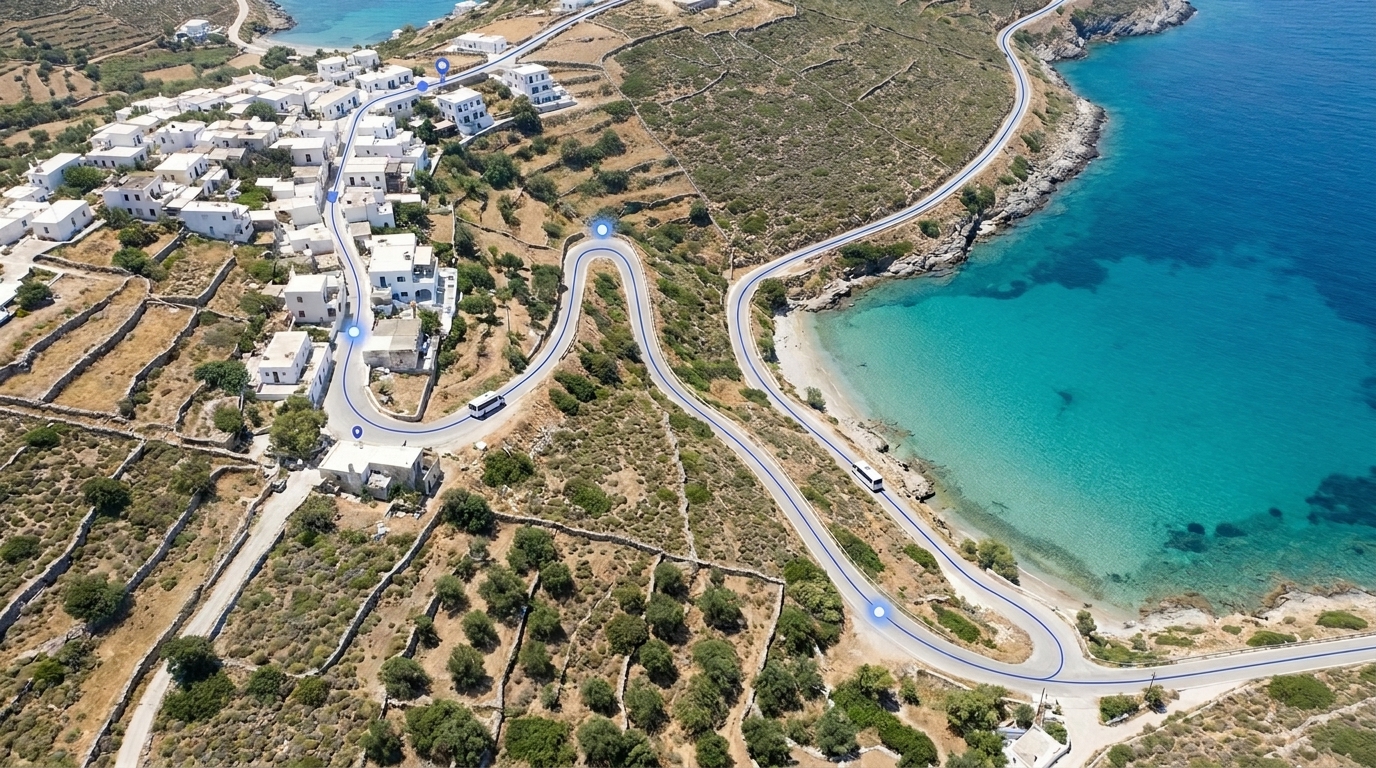
Real-time visibility, dispatch that reassigns itself, zone fares and payments. One platform for the whole service.
And that, when they break, you hear about from a passenger on the phone.
A driver who declines does not stop the trip. The booking moves to the next vehicle and the seat is released on its own. If a vehicle is already running a trip with room left, the booking joins it.
The price follows the zone, and residents pay exactly half. A rate is never overwritten: changing one closes the interval it was in force for and opens a new one, so an invoice issued in March still explains itself in July.
In that order, automatically. The document series comes out without a single gap, because a gap cannot be repaired afterwards, and a failed charge keeps its number and becomes a receivable.
A vehicle with no open shift takes no bookings. A maintenance window takes it out of service by itself and returns it when the window ends, to where it was rather than to a fixed “operational”.
The passenger, the driver and the back office see the same booking at the same moment. No reconciling spreadsheets at the end of the day.
From, to, how many. The fare is shown before confirmation, the ticket is personal, and boarding is verified by code rather than by a slip of paper that goes missing in a pocket.
Opens a shift by claiming a vehicle, accepts or declines, runs the trip. Location leaves the device only while a trip is active. Otherwise the battery is gone by midday.
Bookings, shifts, fleet, tariffs, payments and reporting. Twenty-two screens, and not one of them dimmed out for “later”.
Three differences that only show up once the service is running.
Zones, flat rates or per passenger. Separate tariffs for residents and visitors, each with its own eligibility. You set how the island charges, and every change keeps its history so an invoice from last spring still explains itself.
Day cards, multi-day visitor passes, resident trip bundles, prepaid credit. On an island living on seasonal traffic these often carry more revenue than single tickets, so they are built in rather than bolted on.
Each island keeps its own stations, zones, fares, fleet and staff. Adding the next one is configuration rather than a second system, and an operator sees only the islands they are given.
We will walk through the console with real data and answer the only question that matters: what changes in your working day on Monday morning.